Posts

Inadequate Community Engagement in Madison's 2022 Bus Network Redesign
Image
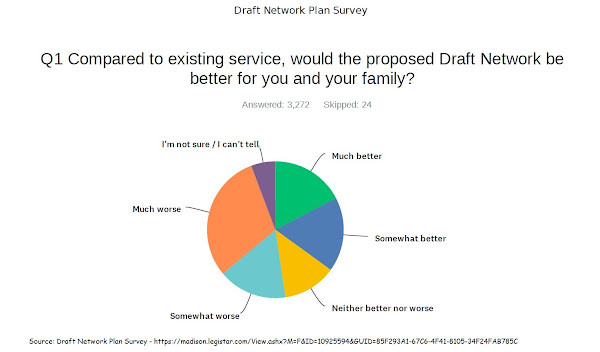
Susan De Vos, Jonathan Mertzig, Laura Green, Kim Owens | September 10, 2022 The success of the project depends solely on the participation of the community. - Metro (https://www.cityofmadison.com/metro/routes-schedules/transit-network-redesign/community-engagement - 8/24/2022) After over a year and a half of studying the existing bus network and drafting a plan for its redesign, the Madison Common Council approved a network redesign on June 7, 2022 that would dramatically alter Madison's public transportation system. Metro claimed that an important contribution to the study and its ultimate draft plan was "community engagement." We disagree. Rather, it would appear that most of the alders who voted for the plan had no clue as to what they were voting for, but rather mindlessly followed the advice of a flawed and undemocratic oversight committee. First, Madison voters overall had expressed a strong desire for a better bus system that would include b...
Community Groups Present Collective Demand for Transit Equity

Image
Community Groups Present Collective Demand for Transit Equity NAACP, South Madison Unite!, South Metropolitan Planning Council, Madison Area Bus Advocates, Southdale Tenants’ Association June 3, 2022 Background We are a coalition of Madison area bus riders, community members, and local leaders. We are speaking out against the Draft Plan of the Madison Metro Redesign. The Draft Plan proposes a paradigm shift to a “ ridership system” that would focus bus service on major thoroughfares where high numbers of potential riders live, work, and shop. On paper, this model appears to increase transit use and revenues. But many area residents are concerned that a ridership model will restrict transit access by already marginalized residents. Both the content of the plan and the design process have excluded large numbers of people who depend most on public transit from participation. We urge the TPPB to pause the approval process of the Draft Plan. We oppose its passag...

An Opportunity to Improve Madison’s Bus System

Image
The city of Madison has developed plans for a redesigned bus system starting in 2023. Limiting its plans to Metro's 2019 budget, it tries to meet artificial cost constraints by reshuffling already inadequate resources rather than by adding sufficiently to them. The redesign plan calls for fewer routes operating more frequently, requires more walking and includes the operation of a Bus Rapid Transit spine. Although also inadequate, the redesign plan gives us an opportunity to have a better transit system over what currently exists. That better system would at once include Bus Rapid Transit, apply true notions of access, equity and frequency, and coordinate with land use plans. A viable skeleton for a robust body, it needs fleshing out. For that to happen, Madison needs to reprioritize its transportation budget and allocate more funds for transit. Good Plans Include Options Despite adding $40 to the Vehicle Registration Fee (VRF or "wheel tax") of Madison residents in ...

Follow the Transit Money or Why Half-Assed Does not Work

Image

Budgeting a Transportation Future in 2021

Image
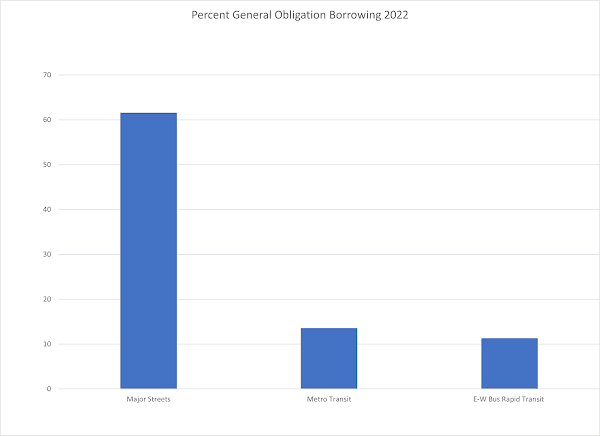
Madison's Mayor recently released her proposed capital budget for next year (2022). Often about a fifth of the total budget, it is that part of the budget where large-scale infrastructure-like items get listed. This year's capital budget of perhaps $355 million is more than twice as large as the capital budget for the previous year and not quite twice the estimated size of the budget in the following year (for 2023). According to one local news article , one reason for its unusual size is "the $166 million price tag for the first phase of BRT [Bus Rapid Transit] ..." The article also observed near the end that "The city's annual debt costs have risen from 12% of the general fund budget in 2011 to roughly 17% in the current year and about the same in 2023."  This caused me to pause, not because I do not have serious questions about the financing of the Bus Rapid Transit scheme here in Madison (I do), but because those questions pertain to day-to-day ope...

Keep the Option of Paying Fares with Cash

Image
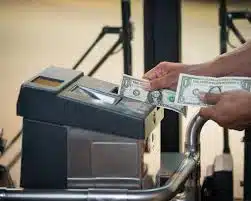
As we emerge from the COVID-19 pandemic, we must prioritize confronting ongoing challenges, including housing affordability, transit access , and resiliency in the face of a changing climate. -- From April 13, 2021 memo to city Department on Division Heads on Proposals for the 2022 Capital Budget (https://www.cityofmadison.com/finance/documents/budget/2022/capital/CapitalMayorMessage.pdf; bold added)   How accessible would you consider the transit system if a new or occasional would-be bus rider were denied a bus ride because she/he/they tried to pay the fare in cash? Madison's Metro Transit just temporarily suspended its recommendation that its fare collection go cashless. For how long is anyone's guess. It had been proposing for months that fares for a new Bus Rapid Transit line be cashless from the outset and that the regular buses go cashless within five years. That is wrong. Metro must keep a cash option . The Money Conundrum Metro's tone-deaf proposa...

For a Future that is Cleaner, Healthier and More Equitable

Image
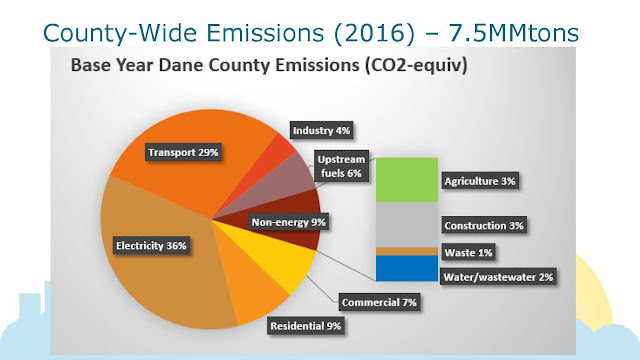
Source: 2020 Dane County Climate Action Plan p.66   According to Dane County's 2020 Climate Action Plan , 29 percent of the county's CO2 emissions in 2016 could be attributed to transportation (p.66). ( National figures are similar.) The Plan also lists "equity and justice" as the first of six guiding principles (p.36). One might expect therefore, that a big part of the county's effort to reduce greenhouse gas emissions would be to pursue "transportation equity" or to ensure "accessible and affordable transportation for everyone." And as someone who prioritizes access to opportunity and oversaw the creation of the county office of energy and climate change, the reader might expect that the county executive would spearhead the effort toward achieving transportation equity. It is both surprising and disappointing therefore that nothing could be farther from the truth. One might expect the transportation part of the Climate Action Plan to have ...